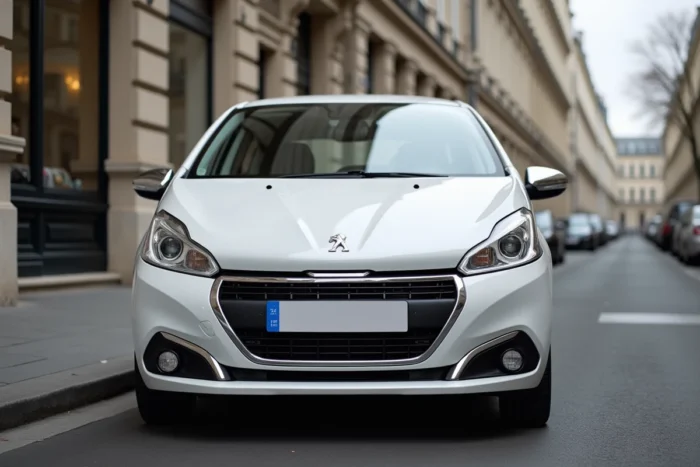
The Peugeot 208 has regularly held the top spot in sales in France since its launch in 2019. Behind this commercial success, the range of engines has changed significantly over the years. Between the PureTech petrol engines, the BlueHDi diesel, the electric e-208, and the new 48 V hybrid versions that appeared with the facelift, the catalog now mixes very different technical generations.
Sorting out what can be ordered new and what is only available used radically changes the understanding of the range.
48 V hybrid engines of the facelifted 208: what has changed for new
The facelift of the 208 has refocused the new thermal offer around light hybridization 48 V. The old atmospheric or turbo PureTech engines without electric assistance are no longer available for new orders. Two power levels now structure the petrol range: a Hybrid 100 version and a Hybrid version around 136 to 145 horsepower depending on the markets and sources.
This 48 V system adds a starter-generator that recovers energy during braking and assists the thermal engine during acceleration phases. The gain in consumption remains modest, but it allows Peugeot to display CO2 emissions compliant with European regulatory thresholds. To better understand the versions and engines of the Peugeot 208, it is essential to distinguish these hybrid blocks from the older PureTech engines that are still widely found on the used market.
The EAT8 automatic transmission accompanies the most powerful version, while the Hybrid 100 can still be equipped with a manual gearbox. This point deserves attention for urban drivers who prefer manual in the city.
PureTech petrol and BlueHDi diesel: reliability and choices in used
In the used market, the 208 is mostly found with the PureTech engine. Three power levels have been offered since 2019: a base block, an intermediate around 100 horsepower, and a more powerful one reaching 130 horsepower. The PureTech 100 remains the most widespread engine in the used fleet, as it represented the best compromise between purchase price and versatility.
The question of the reliability of the PureTech consistently comes up. Field reports vary on this point depending on the model years and maintenance conditions. The oldest blocks (before certain internal changes at Stellantis) have been reported for issues related to the wet timing belt and oil consumption. On more recent examples, these problems seem to be mitigated, although no definitive long-term conclusions can yet be drawn.
The BlueHDi 100 diesel in used
The 1.5 BlueHDi 100 was in the catalog for several years. Diesel has significantly declined in the new offer in favor of hybrid petrol and electric options. However, it remains relevant for high-mileage drivers who buy used and cover more than 20,000 km per year, especially on regular suburban or highway trips.
Conversely, a buyer who primarily drives in the city has no interest in the BlueHDi. The particulate filter does not handle repeated short trips well, and the premium at purchase compared to a used PureTech is not justified for low mileage.
Peugeot e-208 electric: two batteries, two uses
The electric e-208 version has also evolved. Since the facelift, two battery levels coexist in the range, associated with different powers and WLTP ranges. The most powerful version receives a larger capacity battery, offering a range superior to that of the entry-level electric model.
This dual offering changes the game for buyers. The entry-level version is suitable for strictly urban and suburban use, with frequent recharges at home or at work. The high-end version targets those who wish to cover longer distances without planning every charging stop.
- Entry-level E-208: more compact battery, range suited for short daily trips, lower entry price
- High-end E-208: larger battery, superior WLTP range, increased power for overtaking on fast roads
- Both versions share the same platform and exterior dimensions, with the difference lying beneath the floor
Which 208 engine according to your actual use
The choice depends less on the raw technical sheet than on the actual driving profile. Here are the most common scenarios:
- Exclusive urban use: the entry-level e-208 or the Hybrid 100 with manual transmission meet the need without unnecessary extra cost
- Mixed suburban (city and departmental roads): the Hybrid 100 or the Hybrid 136/145 with automatic transmission offer the best compromise between consumption and driving pleasure
- High-mileage used buyer: the BlueHDi 100 retains a cost advantage per kilometer, provided that the condition of the particulate filter and maintenance history are checked
- Recent used purchase: the PureTech 100 dominates the market, but requires careful verification of the maintenance log and cold engine behavior
The range of the Peugeot 208 has become more complex over time. The new versions in 48 V hybrid and electric with dual battery meet current regulatory constraints. The PureTech and BlueHDi versions are now only available used. Clearly separating new and used before comparing engines remains the first step to avoid comparing engines that no longer belong to the same commercial reality.