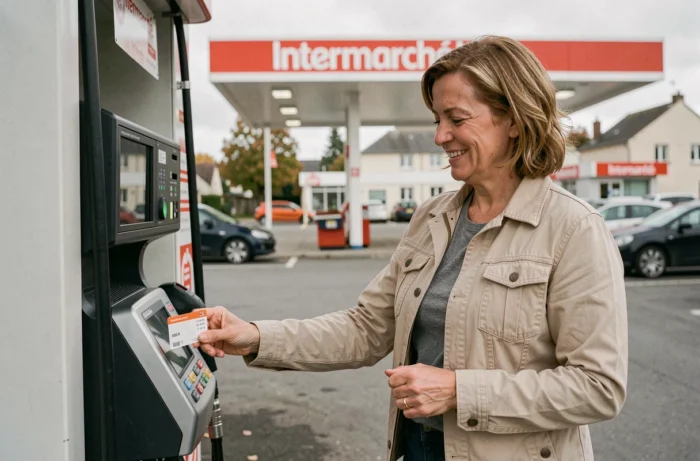
The cost price mechanism for fuel at Intermarché relies on a nearly systematic price alignment with E.Leclerc, which significantly reduces the windows where the brand offers exclusive dates. Understanding this inter-brand dynamic allows for anticipating upcoming operations and deriving real benefits, beyond just the announcement effect.
Price alignment between brands: the true calendar of cost price fuel
Intermarché generally aligns its operations with the same dates as Leclerc. This timing is not coincidental: it is a direct competitive response to avoid losing traffic at the station. Specifically, when Leclerc announces a weekend at cost price, Intermarché and Netto follow suit in the days that follow, sometimes the same weekend.
This harmonization phenomenon has a direct consequence for motorists: the dates of operations are predictable but rarely exclusive. Monitoring Leclerc’s announcements amounts to anticipating those of Intermarché. The operations focus on peak travel periods, particularly in early July and late August, when fuel demand reaches its peak.
We observe that this alignment logic pushes brands to communicate their operations very late, sometimes less than a week before the launch. Following the official pages on social media remains the most reliable channel to know about Intermarché cost price fuel as soon as they are published.
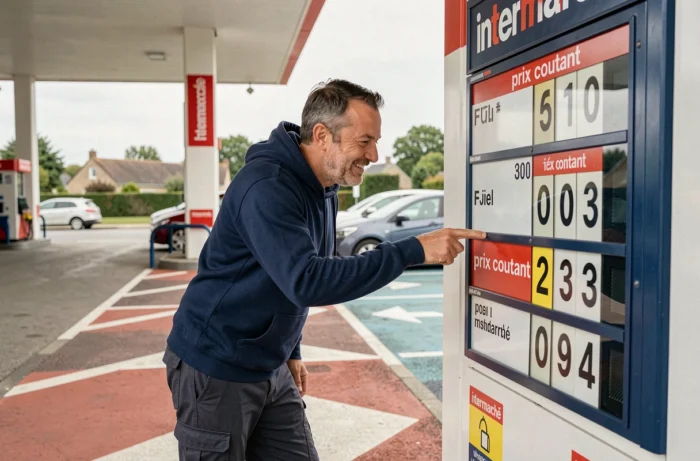
Fuels concerned at Intermarché: diesel, unleaded and exclusions
The cost price does not cover all fuels. During recent operations, Intermarché and Netto applied the discount only on unleaded and diesel. LPG and E85 are frequently excluded from the scheme.
This exclusion often goes unnoticed in mainstream articles that talk about “fuel” in general. Drivers of flex-fuel or LPG-equipped vehicles do not systematically benefit from these promotions. Before planning a detour to a participating Intermarché station, checking the type of fuel covered by the operation avoids disappointment.
- Unleaded 95 and 98: generally included in Intermarché’s cost price operations
- Diesel: systematically covered during recent operations
- E85 and LPG: excluded from most operations, with no guarantee of future inclusion
- Premium fuels (excellium, etc.): treated on a case-by-case basis depending on the stations
Distributor margin and cost price: what you really pay at the pump
The principle of cost price means that the brand waives its margin on fuel. Normally, the distributor’s margin on a liter of fuel remains low, on the order of a few cents. The cost price operation eliminates this portion, but does not affect taxes or supply costs, which represent the vast majority of the final price.
In practice, the savings on a full tank remain modest in absolute value. The brand’s interest is not to profit from fuel but to attract traffic in-store. The bet relies on the fact that the customer will also fill their cart. This economic model explains why operations rarely last more than two days: extending the period without margin on fuel is only profitable if the in-store flow compensates significantly.
The regulatory context of 2026 further frames the margins of fuel distributors. This regulation mechanically reduces the gap between the normal price and the cost price, which diminishes the perceived attractiveness of these operations compared to previous years. The difference per liter between a normal day and an operation day tends to narrow.
Participating Intermarché stations: check before you go
Not all Intermarché stations participate in cost price operations. The list of concerned stores is published by the brand a few days before each operation, usually on its social media and sometimes on its website.
We recommend cross-referencing this information with the government site prix-carburants.gouv.fr, which displays real-time prices by station. This double-checking allows confirming that the nearest station is indeed applying the announced price. Some stations display the cost price with a delay of a few hours compared to the official launch of the operation.
- Check the Facebook page or the Intermarché website for the list of participating stations
- Verify the displayed price on prix-carburants.gouv.fr on the same day
- Avoid the first hours of the operation if the station is in a densely populated urban area (queues, temporary stock shortages at some pumps)
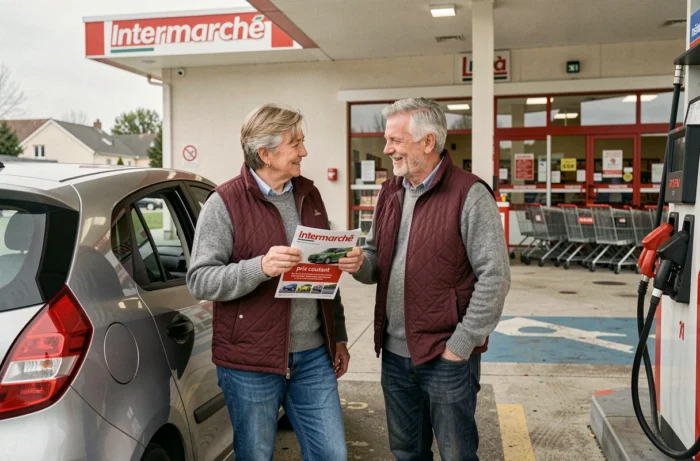
Profitability of the detour: when the cost price operation is worth the trip
The gain per liter during a cost price operation is limited by the structural weakness of the distributor margin. A detour of more than a few kilometers often cancels out the savings made in additional fuel consumed and time.
For the operation to be truly advantageous, the participating station must be on a usual route or in immediate proximity. Motorists who drive a lot, especially on the highway before a vacation departure, should look for Intermarché stations located at highway exits rather than in the city center, where accessibility is better and queues are shorter.
The cost price fuel operation at Intermarché remains a one-time savings lever, conditioned by geographical proximity and the type of fuel used. With the tightening of margins regulated in 2026, the gap with usual prices tends to decrease. It is better to target operations that fall on a pre-planned route rather than changing habits for a few cents per liter.