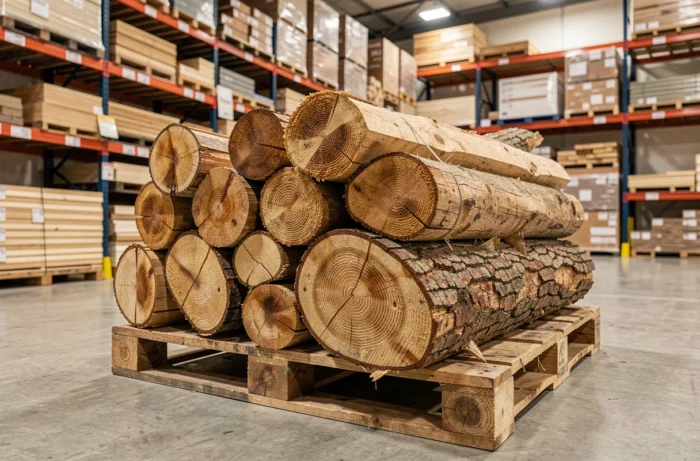
A densified log is a block of fuel obtained by compressing sawdust and wood chips, without glue or chemical binder. Its moisture content, often advertised at 12% or less at Brico Dépôt, provides it with a consistent burn and produces less ash compared to traditionally poorly dried firewood. It remains to be seen how the references offered in the store actually perform, and how to avoid the most common purchasing mistakes.
Ash content and burn consistency: what differentiates two densified logs at the same price
The moisture content displayed on the packaging is not enough to judge the quality of a compressed log. Two references can show the same moisture level and yield very different results in a wood stove or insert.
The ash content is an indicator often absent from labels in DIY stores. A log that leaves little residue after burning will cause less buildup on the glass, the firebox, and the flue. This information is rarely highlighted, but it directly influences the cleaning frequency and the lifespan of the heating device.
The burn consistency also depends on the density of the compression. A poorly compressed log will crumble quickly, produce short flames, and emit less heat over time. In contrast, a well-densified block maintains a gradual and steady temperature rise for several hours.
Before buying compressed logs at Brico Dépôt, comparing the unit weight of each log against its price provides a more reliable indication than just the price per pack. A lighter pack of four logs at the same price means lower density, thus potentially lower calorific efficiency.

Densified log day or night at Brico Dépôt: two distinct uses
The heating aisles at Brico Dépôt offer two families of densified logs, each designed for a specific time of day. Confusing them amounts to misusing your fuel.
Day log: bright flame and rapid heat rise
The daytime densified log is made to produce a visible flame and intense heat for a duration of a few hours. It is suitable for times when the fire is monitored and when the house needs a quick temperature rise. Its composition, generally based on softwoods or a mix of softwoods and hardwoods, facilitates easier ignition.
Night log: slow combustion and heat retention
The night log burns slowly to maintain a stable temperature without supervision. Its denser structure, often made from high-pressure compressed hardwood, allows it to burn for an extended period. The goal is to have active embers in the morning, capable of quickly reigniting a fire.
Using a day log at night is a waste of fuel, as it will be completely consumed well before waking up. Using a night log during the day produces few visible flames and a heat rise that is too slow to warm a cold room.
Real cost per kilo and pickup constraints in-store
The price displayed per pack at Brico Dépôt does not always reflect the actual cost of heating with densified logs. Comparing offers requires a simple calculation that is rarely done in-store.
- Total weight of the pack relative to the price: dividing the price by the number of kilos gives the cost per kilo, the only reliable indicator for comparing two brands or two different formats
- Transport costs if purchased online: a pallet of densified logs is heavy, and delivery fees can represent a significant portion of the total budget
- Number of trips in a personal vehicle: buying in small quantities at the nearest store multiplies the back-and-forth trips, which increases the actual bill (fuel, time) compared to a bulk order
- Storage capacity at home: compressed logs are very sensitive to moisture and must be kept in a dry and ventilated place, which limits the amount that can be purchased at once for homes without a garage or covered shelter
A bulk purchase (full pallet) reduces the price per kilo but requires suitable storage space. Storing densified logs in a damp place negates their main advantage: the low moisture content that ensures their efficiency.
Reviews on Brico Dépôt densified logs: field feedback and limitations
Online reviews of Brico Dépôt in general are mixed. Specifically regarding densified logs, feedback often mentions variable availability depending on the store and the season. Stock shortages in the middle of winter remain the most frequent complaint.
Regarding the quality of the product itself, users with newer wood stoves report clean combustion and good heat output. Owners of open fireplaces are less satisfied, as the compressed log loses some of its efficiency without a closed firebox to capture the heat.
A practical point to remember: Brico Dépôt offers a customer service reachable by phone with specific hours, as well as a platform dedicated to deaf and hard-of-hearing individuals. In case of issues during pickup or receipt of a damaged lot, these channels allow for handling the complaint without needing to travel again.
Storage of compressed logs: the condition of their effectiveness
A densified log exposed to moisture swells, loses its cohesion, and burns as poorly as overly green firewood. Storage directly affects the performance of the fuel.
The ideal location is a covered, dry space, protected from rain and moisture rising from the ground. Placing the logs on an elevated pallet in a garage or a closed garden shed is sufficient in most cases. Avoid damp basements, open lean-tos, and direct contact with an uninsulated exterior wall.
Keeping the original packaging sealed until use protects the logs for several months. Once the plastic wrap is opened, it is preferable to consume the lot quickly, especially in regions with high humidity.
The choice between a small trial lot and a full pallet thus depends as much on available space as on budget. Buying more than what the home can store properly means paying for degraded fuel even before the first fire.