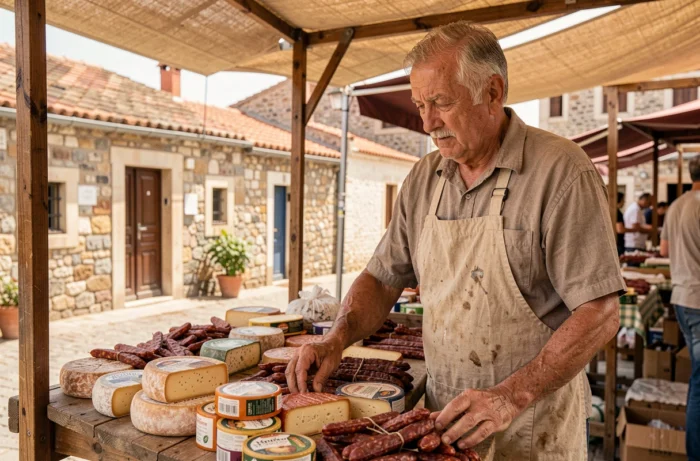
On the port of Porto Torres, on Tuesday morning, you can smell the market before you see it. The scent of fresh cheese and aromatic herbs guides your steps long before you catch sight of the first stalls. This weekly event operates on a direct agricultural sales model, the Mercato di Campagna Amica, where local farms sell without intermediaries.
The result: adjusted prices, products harvested the day before, and honest exchanges with those who work the land of northwestern Sardinia.
Direct agricultural sales in Porto Torres: what the short supply chain changes in Sardinia
The Mercato di Campagna Amica is not a tourist market set up for the season. It is mostly frequented by locals who come to fill their baskets for the week. The producers present cultivate within a close radius of the city, between the Nurra plain and the hills that descend towards Sassari.
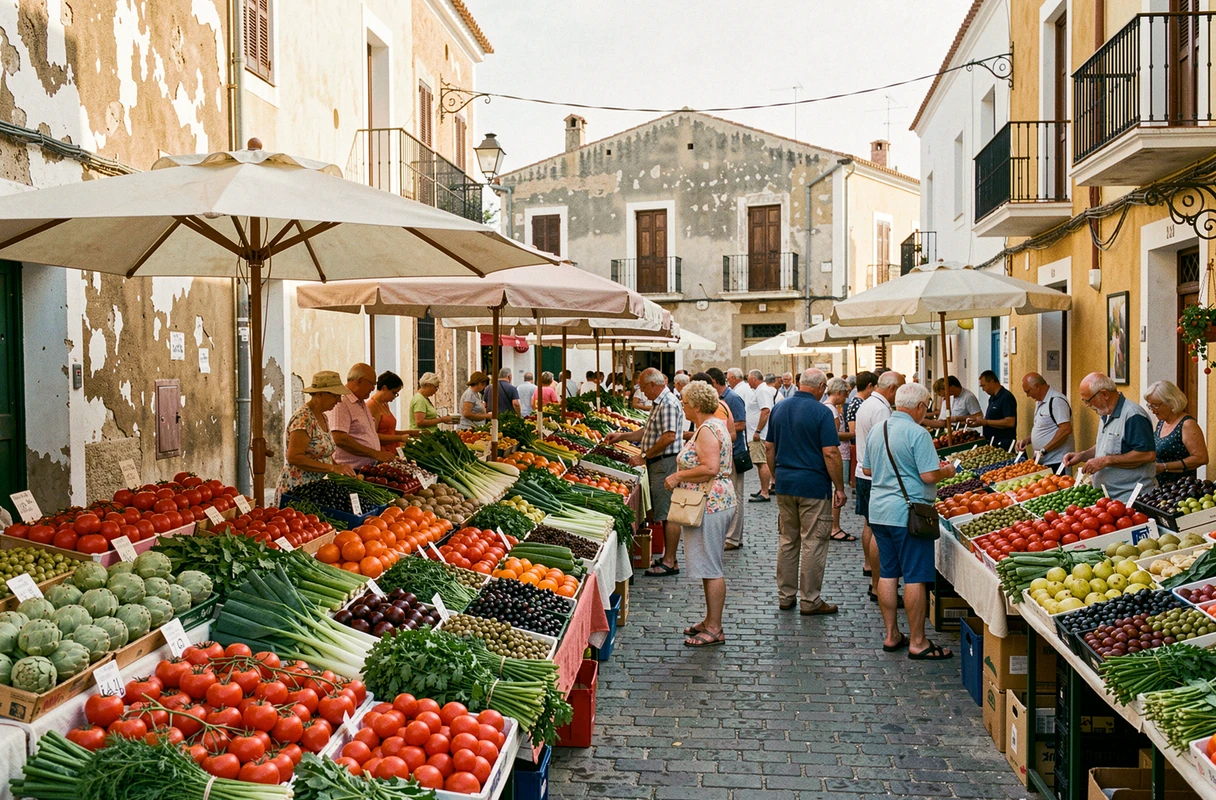
This short supply chain model has a direct consequence on the stalls: the products change from week to week according to the harvests. In summer, ribbed tomatoes and zucchinis dominate. In autumn, mushrooms and olives take over. You don’t choose what to buy from a fixed catalog; you work with what the land has provided.
For those planning their visit, exploring the market of Porto Torres in Sardinia allows you to understand this territorial logic before stepping foot there.
Feedback varies on the exact size of the market depending on the time of year. Summer attracts more producers, while winter concentrates the offerings on cheeses, cured meats, and artisanal preserves.
Bottarga, pane carasau, fregola: the Sardinian products found at the stalls
Talking about a Sardinian market without naming its flagship products would be like describing a vineyard without mentioning grapes. In Porto Torres, certain specialties consistently appear at the stalls and deserve a stop.
- Bottarga (mullet roe) is presented in an amber block, sold whole or grated. It is used to enhance simple pasta dishes or salads, drizzled with local olive oil.
- Pane carasau, this crispy flatbread baked twice, keeps for several weeks. Market producers offer it plain or seasoned with oil and salt (pane guttiau).
- Fregola, a small toasted semolina pasta typical of Sardinia, is found in artisanal packets. It is traditionally cooked with clams or in broth.
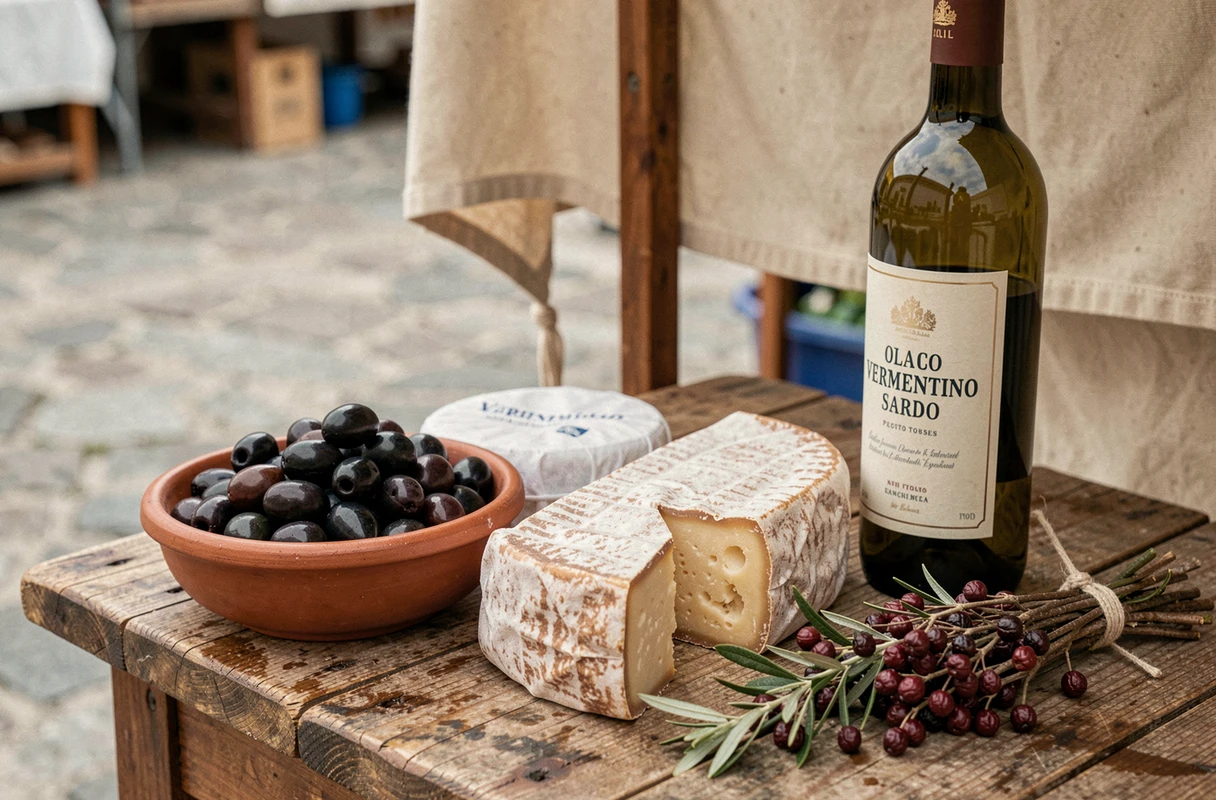
- Sheep cheeses, from fresh pecorino to aged pecorino, hold a central place. Each producer has their recipe, their aging process, their character.
These products are not curiosities arranged for tourists. They are the staples of daily cooking in this part of the island. When observing the regulars at the market, their baskets almost always contain bread, cheese, and seasonal vegetables.
Seasonality and local purchases
Porceddu (roast suckling pig) is not found directly at the market stalls, but local butchers and charcutiers who have stands offer the necessary cuts to prepare it at home. Sardinian pork, raised in semi-freedom, has a distinct flavor linked to the scrubland the animals feed on.
Shopping at the Tuesday morning market requires cooking according to the territory, not based on a pre-decided shopping list. This is an adjustment that visitors are not always used to, but it is part of the experience.
Atmosphere of the Porto Torres market: how locals do their shopping
You don’t come to the Porto Torres market like you enter a supermarket. The rhythm is different. Regulars arrive early, between eight and nine o’clock, when the stalls are still well-stocked. They know the producers by name, discuss the harvests, and catch up.
The exchanges are not staged. The market functions as a social link between town and countryside. Farmers coming down from the Nurra or the surroundings of Sassari often have the same customers for years. This loyalty guarantees a form of informal traceability that official labels do not always replace.
Hours and practical organization
The market takes place on Tuesday mornings, usually until early afternoon. The best products sell out quickly: arriving before ten o’clock gives access to the full offering. Most producers prefer cash payments, although some accept card payments.
The market is located in an area accessible on foot from the port and the city center. For visitors arriving by ferry from Corsica or the mainland, it is a first immersion into Sardinian daily life even before heading towards Alghero or Stintino.
Porto Torres beyond the market: a port city to explore
Porto Torres remains primarily an entry point for travelers arriving in Sardinia by sea. The city itself is often passed through without stopping, which is a shame. Outside the market, the archaeological site of Turris Libisonis testifies to the Roman presence in the northwest of the island.
The port offers regular connections with Corsica and several cities on the mainland. Timing your arrival on a Tuesday allows you to combine disembarkation and a visit to the market, a concrete way to start a trip in Sardinia with its local products rather than via a highway.
The surrounding villages (Stintino, La Pelosa beach, the Asinara National Park) complete the stay. The Porto Torres market sets the tone: that of an island where the table and the territory remain directly linked, without detours.