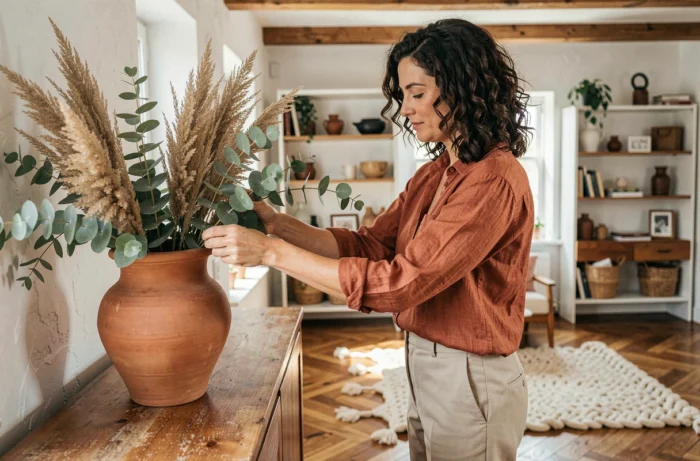
The interior decoration market is going through a paradoxical phase. Biophilia, modularity, slow decor, wellness design: the keywords change every season, but the visual results often converge towards the same palettes and arrangements. Creating a space that reflects a unique identity requires understanding these trends without dissolving into them.
Unique decoration: why the accumulation of trends standardizes interiors
Each season brings its share of stylistic directions presented as new. Immersive colors replace neutral tones, raw materials succeed smooth finishes, and modular furniture dethrones fixed pieces. Taken in isolation, each of these choices can add character to a room.
The problem arises when multiple trends are stacked in the same space. A living room that combines a modular sofa, a textured plaster wall, a natural fiber pendant light, and a terracotta-hued rug resembles a catalog, not a personality. Layering trends does not create a personal style.
The brands that promote these trends offer coordinated ranges. A customer who buys the table often buys the matching chairs, then the accessories presented in the same ambiance. The result: thousands of identical living rooms from one end of the country to the other. To explore furniture and accessories that break away from these standardized circuits, a useful resource is: https://espace-deco.be/, which references ranges oriented towards the uniqueness of choices.
Raw materials and artisanal know-how: the anti-uniformity filter
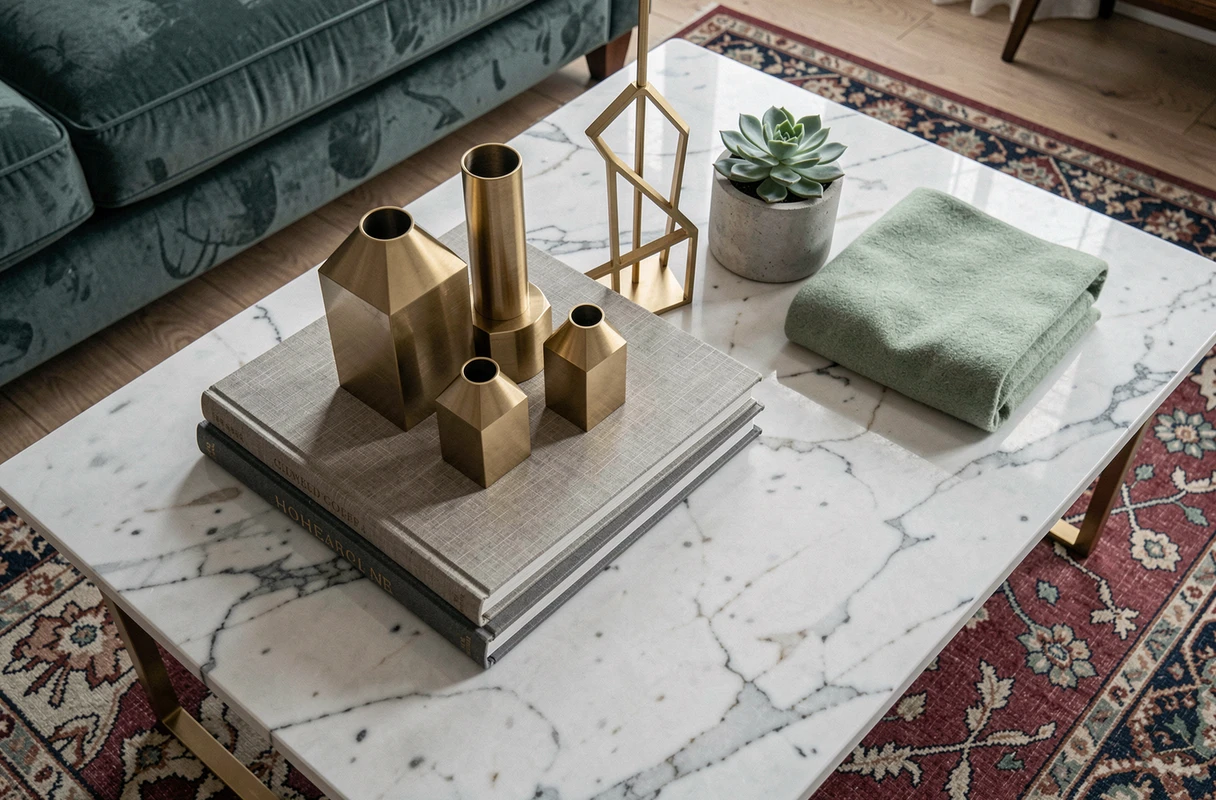
Field feedback converges on one point: an artisanal piece anchors an interior more sustainably than a mass-produced object. A hand-blown light fixture, a ceramic piece turned by a local potter, a solid wood piece crafted without veneer will not be found at the neighbor’s. This irreproducibility is precisely what makes an interior unique.
The slow decor trend, which has been gaining ground for several seasons, formalizes this approach. The principle is based on selection before purchase: fewer objects, but chosen for their quality of craftsmanship and their coherence with the existing space.
Concrete criteria for evaluating an artisanal piece
- The traceability of the material: solid wood identified by species, uncoated raw metal, textile woven with a named fiber. A seller who cannot answer these questions is likely selling disguised industrial products.
- Deliberate irregularities: a slight asymmetry, a variation in hue, marks from manual tools. These details signal human work and give the piece its character.
- Structural durability: joinery with dowels or mortise and tenon rather than screws hidden by plastic caps. A well-built artisanal piece can last decades without appearing dated.
On the other hand, the label “artisanal” is sometimes misused by brands that outsource semi-industrial production. Available data does not always allow for verification of these claims without seeing the object in person.
Colors and visual coherence in a living room or bedroom
Color remains the most powerful and least expensive decorative lever. A repainted wall transforms the perception of an entire room. The palettes proposed in 2026 oscillate between saturated hues (deep terracotta, midnight blue, forest green) and soft earth-inspired shades.
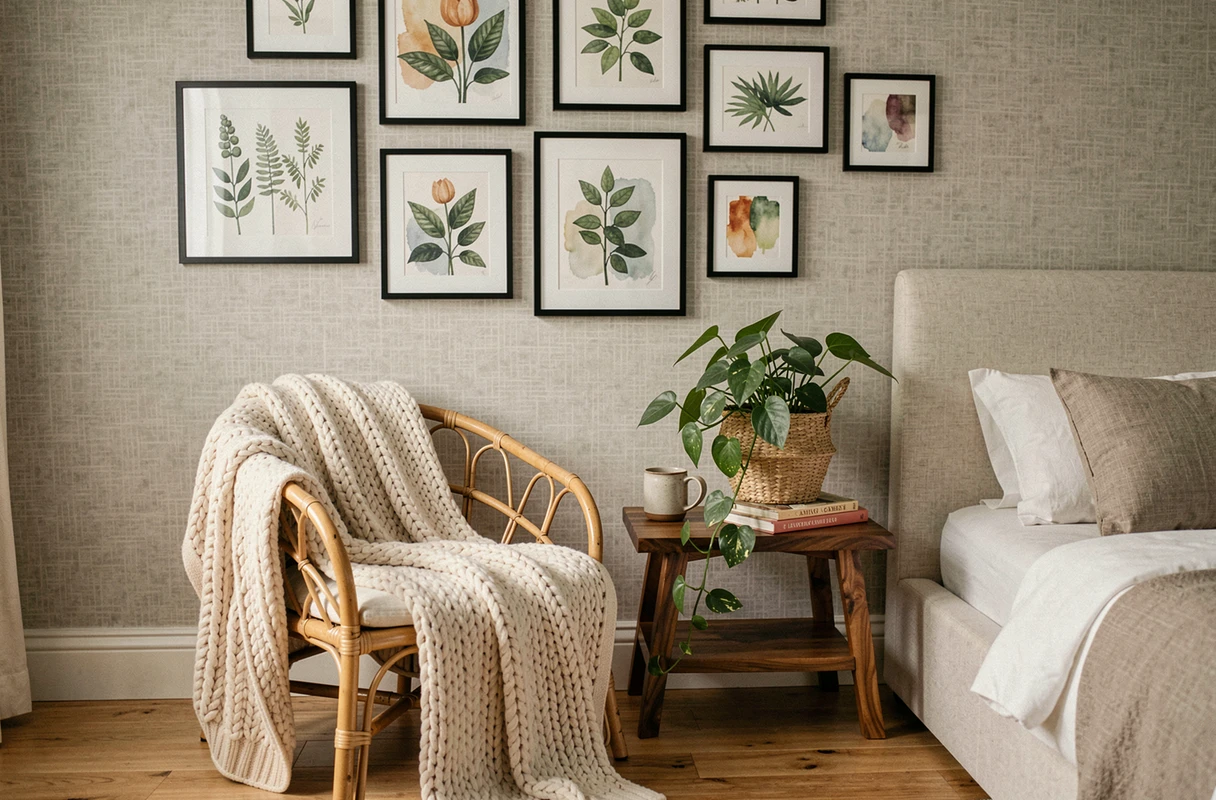
Limiting your palette to a maximum of three colors per room avoids a patchwork effect. One dominant color on the walls, one secondary color for the main furniture, and one accent color for textiles and accessories. This simple rule produces a coherence that the addition of a fourth or fifth hue would muddle.
Test the color before committing
Paint a sample directly on the wall in question, next to a window and in an opposite corner, then observe the result at different times of the day. Natural light radically alters the perception of a hue. A bright sage green at noon can turn grayish under artificial light in the evening.
Digital simulation tools provide a first indication, but the actual light in your room remains the only reliable judge. A sample pot costs little compared to the risk of repainting an entire room.
Modular furniture and wellness design: separating the durable from the gimmick
Modularity is making significant strides in interior design. Reconfigurable modular sofas, adjustable shelves, foldable desks: the offering is expanding, driven by the constraints of small living spaces and the hybridization of uses between work and relaxation.
The concept of wellness design pushes the logic further: the layout must promote physical and mental well-being. Smooth circulation in the room, preserved sources of natural light, noise reduction through absorbent textiles. The comfort of a space is first measured by what you take from it, not by what you add to it.
- A useful modular piece solves a specific spatial problem (missing storage, removable partition between two areas). A gimmicky modular piece can theoretically be reconfigured but remains in the same position for years.
- Well-thought-out lighting combines a main source adjustable in intensity with two to three supplementary light points. Multiplying decorative lamps without a lighting plan creates uncomfortable shadow areas.
- Biophilia (integration of living plants) works when the chosen plants can withstand the actual conditions of the room. A ficus in a hallway without natural light provides neither sustainable greenery nor well-being.
Wellness design encompasses various practices. Some, like managing natural light and textile acoustics, concretely alter the comfort of a space. Others are more about renaming classic layout principles.
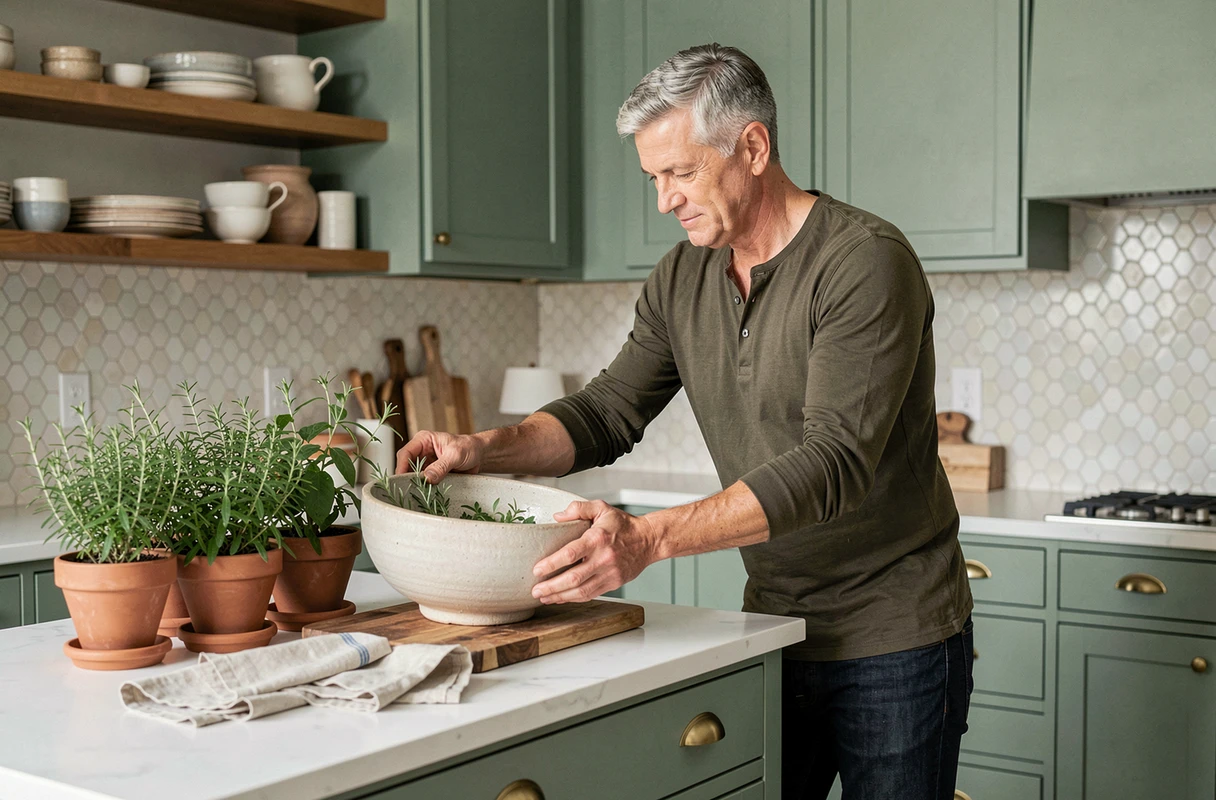
A unique interior is not built by following a list of trends, but by making deliberate choices, sometimes against the tide. Keeping a white wall when everyone is switching to forest green, retaining an antique piece amidst a contemporary decor, refusing an attractive object because it does not solve anything in the existing space: these concrete decisions, piece by piece, give an interior its own coherence.