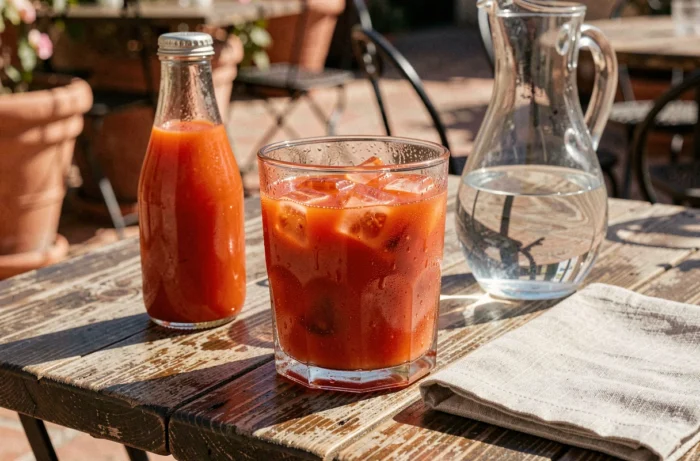
The Ricard tomato does not contain any tomato. This detail often surprises people who discover this mix for the first time. The name comes from the reddish-orange color obtained by adding grenadine syrup to pastis. Behind this misleading name lies an aperitif rooted in the culture of the southern French counters, linked to the creation of the Ricard brand in 1932.
Why the Ricard tomato has this name without containing tomato
Have you ever ordered a “tomato” in a Provençal bar? If you were expecting vegetable juice, the surprise must have been genuine. The term only refers to the color of the glass once the grenadine syrup is mixed with the diluted pastis.
This discrepancy between the name and the content is part of the counter vocabulary passed down orally. Just like the “parrot” (pastis and mint syrup, for its green color) or the “Mauresque” (pastis and orgeat, for its milky whiteness), the tomato gets its name from its color, not its ingredients.
The Ricard brand itself claims this recipe among its historical variants. So it is neither a recent trend nor a creative bartender’s invention. The Ricard tomato cocktail belongs to the same heritage as plain pastis diluted with fresh water, that of summer terraces and pétanque games.
Order of service for grenadine pastis: the technique that changes the glass
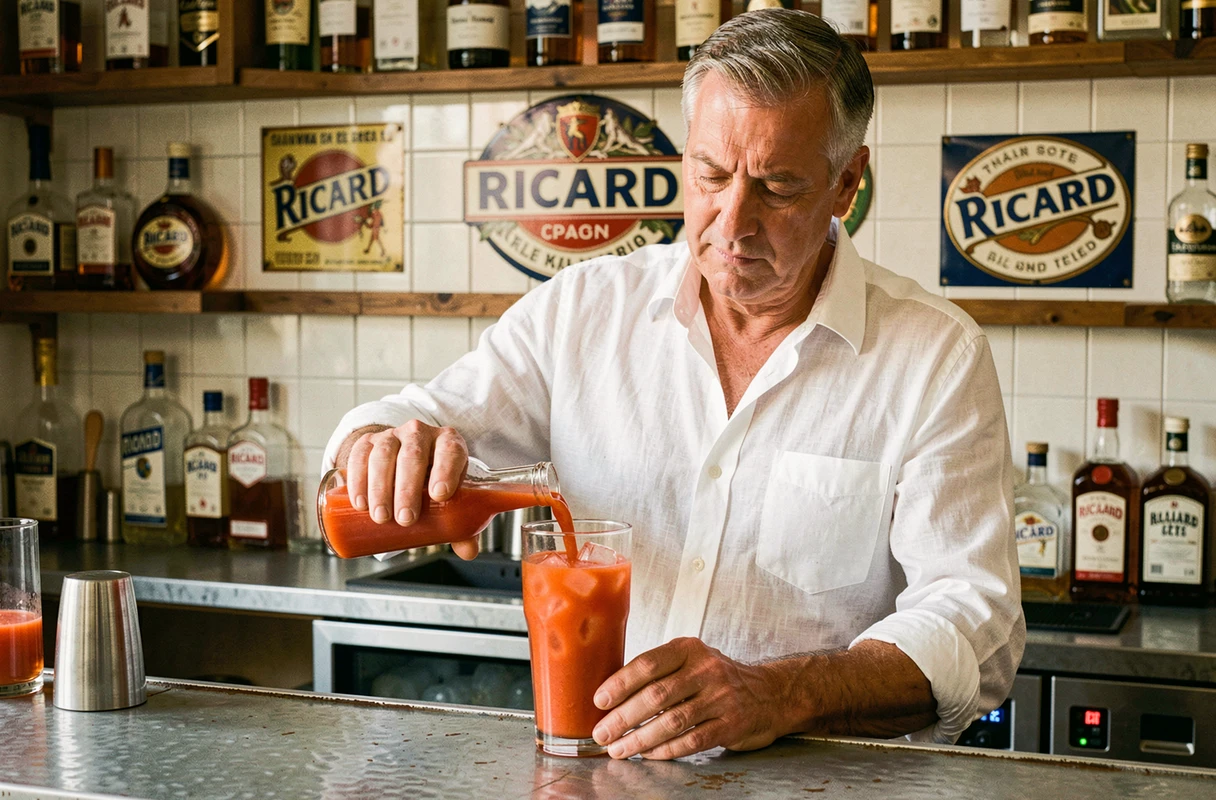
Most online recipes list the ingredients without emphasizing the order in which to pour them. This is a mistake. The order of service directly influences the color and balance of the mix.
The method that yields the best result follows a precise logic:
- The grenadine syrup goes to the bottom of the glass first, creating the sweet and colored base
- The pastis is poured next (the standard serving size in bars is 2 cl), it settles on the syrup without mixing immediately
- The still water comes last, slowly, to provoke the characteristic milky cloudiness of pastis while diffusing the grenadine
- The ice cubes, if you add them, come after the water to avoid blocking the dilution
Why this order rather than another? Because pastis reacts to dilution: its essential oils from anise become opaque upon contact with water. If you pour the water before the pastis, you lose the reddish-orange visual gradient that gives the tomato its identity.
A simple dash of grenadine is enough. Too much syrup masks the anise and turns the glass into a sweet drink. The balance lies in restraint.
Tomato, parrot, Mauresque: the trio of flavored pastis
Isolating the tomato from the other pastis variants misses what makes these mixes interesting. They form a coherent system, born from the same logic: one syrup, one color, one nickname.
| Name | Added Syrup | Obtained Color |
|---|---|---|
| Tomato | Grenadine | Reddish-orange |
| Parrot | Mint | Green |
| Mauresque | Orgeat | Milky white |
These three variants share the same base (pastis, water, ice cubes) and the same dosage. The difference lies in the syrup. The choice of syrup radically alters the taste profile: mint brings freshness, orgeat adds almond roundness, grenadine offers fruity sweetness.
In the bars of southern France, ordering one of these three names requires no explanation. The bartender knows exactly what to serve. This shared, almost coded knowledge is part of the local aperitif culture.

Ricard tomato and the return to classic French aperitifs
The tomato is reappearing in conversations on social media and specialized beverage media. This resurgence is part of a broader trend of rediscovering traditional French aperitifs, far from complex cocktails made with imported spirits.
Pastis remains one of the best-selling products in France in the aniseed aperitif category. The tomato benefits from this commercial foundation. It does not need to be reinvented, just reminded to those who have forgotten it or never tasted it.
What is appealing about this mix is its radical simplicity. Three ingredients, no specific equipment, almost no preparation time. At a time when cocktail menus are lengthening and becoming more complicated, the tomato offers the opposite: a clear, accessible, unpretentious glass.
The fact that Ricard maintains this recipe in its official repertoire also shows a brand strategy. Rather than multiplying innovations, the company preserves and values its classics. The tomato is not a new product; it is a faithful product.
One point remains that pastis enthusiasts know well: the quality of the grenadine syrup matters as much as that of the pastis. An artisanal syrup, more concentrated in fruit, will yield a very different result from an industrial syrup. The final glass depends as much on the syrup as on the anise.