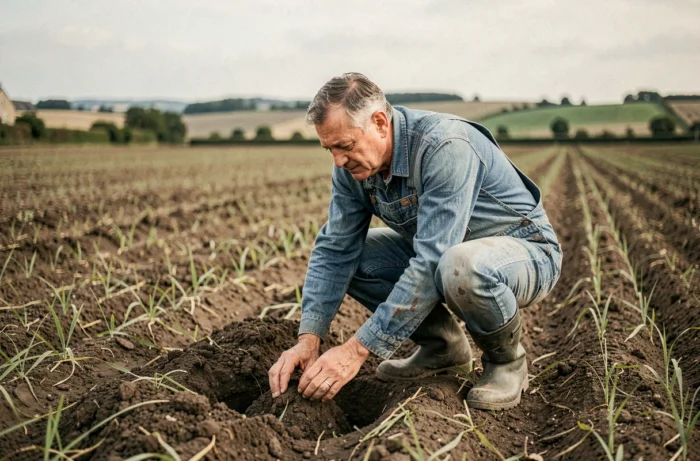
The purchase of agricultural land in France follows a regulatory framework distinct from that of traditional real estate. Rural land is subject to a strengthened protection regime, aimed at preserving the activities of operators and limiting speculation on land. Any acquisition, whether from a farmer or an individual, must deal with control bodies, preemption rights, and usage constraints that common real estate sales law does not provide for.
Preemption Right of the Safer: the Mechanism that Conditions Any Transaction
The Safer (Société d’aménagement foncier et d’établissement rural) is the central player in the agricultural land market. Under the supervision of the Ministries of Agriculture and Finance, it has a preemption right over almost all sales of agricultural land. Specifically, when an owner puts a plot up for sale, the notary must notify the Safer, which can decide to purchase the property as a priority, even if an agreement has already been reached between the seller and the buyer.
This preemption right aims to direct land towards projects deemed priority: the establishment of young farmers, the expansion of small farms, and the maintenance of agricultural use of soils. There is one Safer per major region, responsible for transactions within its perimeter.
For a buyer, this means that no sale is finalized until the Safer has waived its preemption. The review period varies, but this step must be integrated as a suspensive condition in fact. Approaching the Safer early in the project allows for verification of whether the targeted plot falls within its intervention priorities and to present a solid file even before signing a preliminary agreement.
When considering buying agricultural land with Ld L’Immobilier, understanding this preemption mechanism is part of the prerequisites for any concrete approach.
Buying Agricultural Land Without Being a Farmer: What the Regulations Say
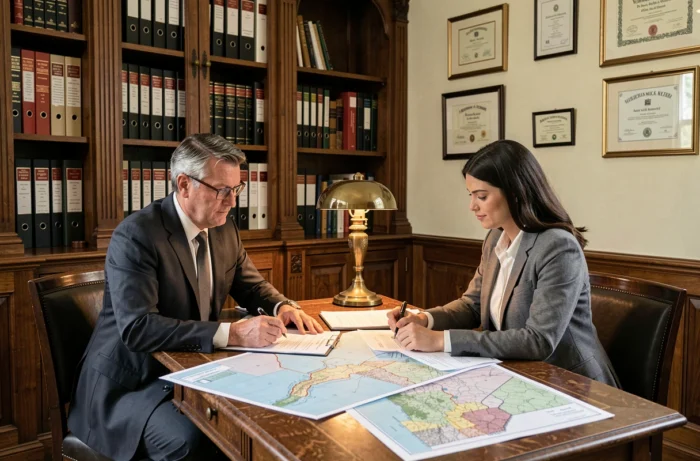
No law formally prohibits a non-farmer individual from acquiring agricultural land. The farmer status is not a legal prerequisite for purchase. However, the absence of this status significantly complicates the process and reduces the chances of having one’s application accepted compared to a candidate farmer.
The Safer, when reviewing applications, applies selection criteria that favor viable agricultural projects. Active farmers, young individuals in the process of establishing themselves, and existing farms looking to expand are prioritized over individuals without an agricultural project. A non-farmer wishing to acquire a plot must therefore demonstrate a use compatible with the land’s purpose.
Selection Criteria Applied by the Safer
- The coherence of the project with local land development policy (maintaining agricultural activity, preserving natural spaces)
- The financial capacity of the buyer and the economic viability of the proposed project
- The personal situation of the candidate: age, possible agricultural training, geographical proximity to the land
- The size of the existing farm if the candidate is already a farmer, in order not to favor excessive concentration of land
An individual can partially bypass these constraints by renting the land to an operator through a rural lease, which satisfies the requirement to maintain agricultural use. However, this option is still regulated and requires finding a tenant willing to commit.
Sale of Leased or Free Agricultural Land: Two Distinct Regimes
The status of the land at the time of sale profoundly changes the applicable rules. A piece of agricultural land occupied by a farmer under a rural lease is not sold under the same conditions as free land.
When the land is leased, the existing tenant has a preemption right that adds to that of the Safer. The owner must notify their intention to sell to the farmer, who then has a period to express interest in purchasing. Only if they waive this right can the sale proceed with a third party, again subject to the Safer’s decision.
When the land is free of any occupation, only the Safer’s preemption applies. The procedure is more straightforward, but the price remains subject to a form of control. If the Safer deems the sale price excessive compared to local references, it can propose a downward revision as part of its preemption.
Notary Fees on Agricultural Land
Notary fees for the acquisition of agricultural land are generally higher in proportion than for a residence because transfer duties apply to the value of the property without the allowances provided for residential real estate. They represent a significant part of the total cost of the operation, which must be factored in from the financial planning stage of the project.
Financing and Loans for the Acquisition of Agricultural Land
Financing for agricultural land does not go through the same channels as a traditional mortgage. Generalist banks rarely offer products tailored to this type of acquisition, particularly because the value of agricultural land evolves according to dynamics specific to the rural land market.
Specialized agricultural credit organizations remain the reference interlocutors. They have analysis grids adapted to the profitability of a farm and the specificities of rural land. For a non-farmer, obtaining a loan requires presenting a documented economic project.
- The subsidized loan, reserved for young farmers in the process of establishing themselves, offers more favorable rates under certain eligibility conditions
- The classic medium or long-term loan remains accessible to established operators, with amortization periods suited to the nature of the property
- Partial self-financing is often required, as banks rarely cover the entire purchase price and associated costs
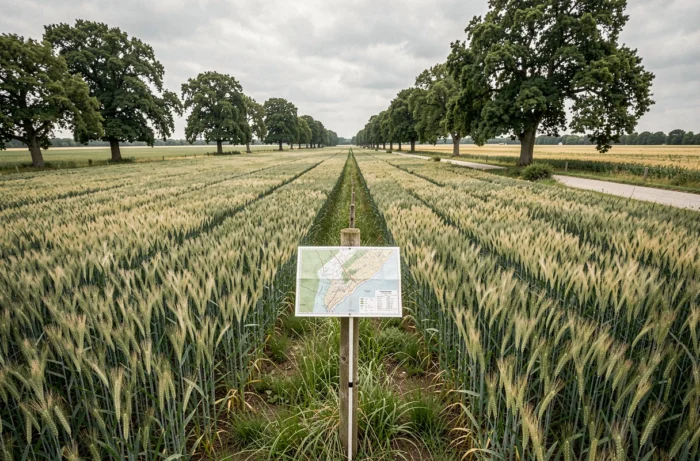
The question of financing is even more pressing given that the price of agricultural land varies significantly from one department to another. Price differences between large crop areas and mountainous regions can range from simple to quintuple, making any average estimate less relevant for a localized project.
The purchase of agricultural land in France remains a step-by-step process, where each player (Safer, notary, bank, existing farmer) intervenes at a specific moment. Neglecting any of these steps can block or cancel an already advanced transaction. Before committing, checking the status of the land, anticipating the preemption period, and securing financing are the three foundations of a solid project.